
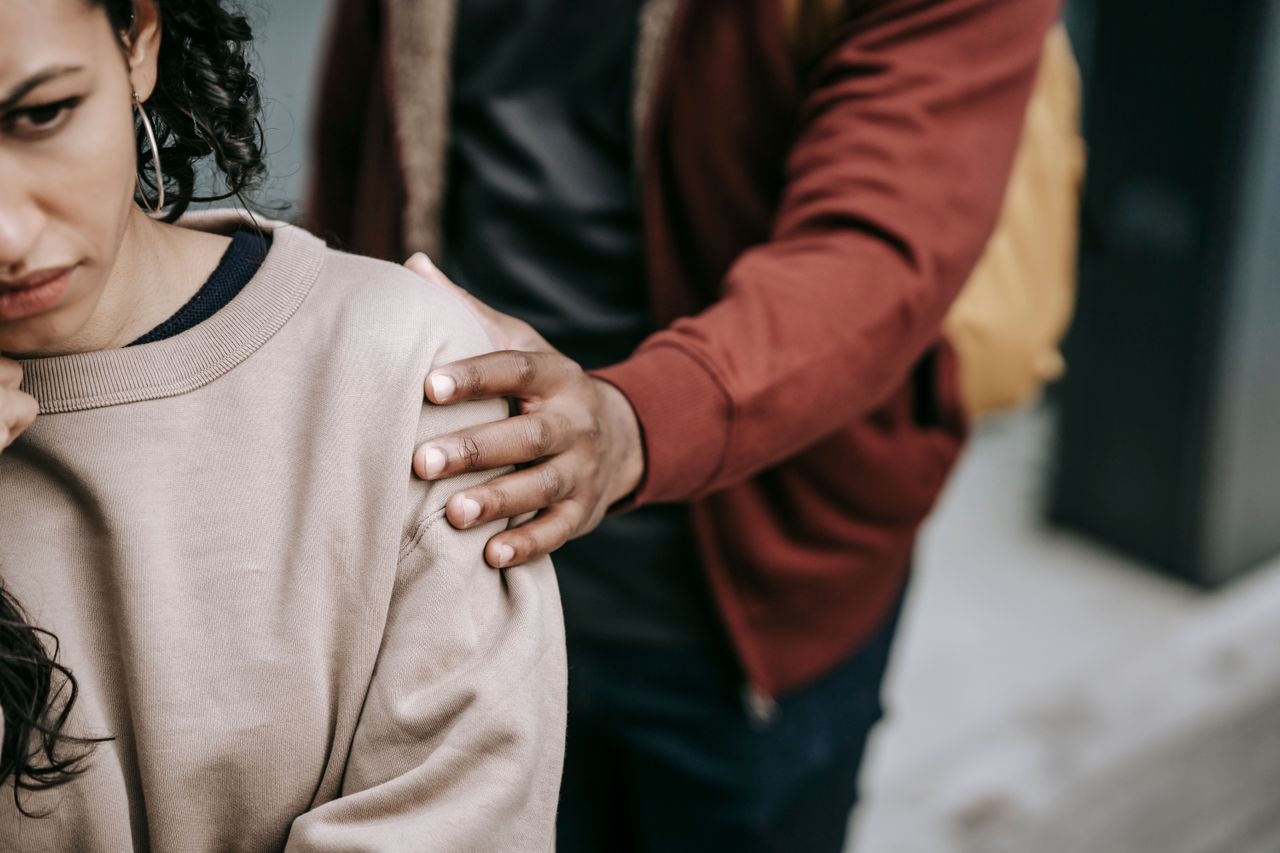
If your immigration case is tied to your marriage, an abusive spouse may try to make you believe that your immigration status depends entirely on them.
Maybe they threaten to withdraw your Green Card paperwork. Maybe they tell you that if you leave the relationship, you will be deported. Or perhaps they use your immigration status to make you afraid to speak with anyone about what is happening at home.
For some immigrants in New Jersey, those threats can create the feeling that there is no safe way out.
But an abusive spouse does not necessarily have complete control over your immigration options.
Under the Violence Against Women Act, commonly known as VAWA, certain people who have experienced abuse by a U.S. citizen or lawful permanent resident spouse can seek immigration benefits independently through a process known as self-petitioning.
VAWA protections are not limited to women; eligible petitioners can seek relief regardless of gender.
Can You File an Immigration Petition Without Your Spouse?
In some circumstances, yes.
In a typical marriage-based case, the U.S. citizen or lawful permanent resident spouse files Form I-130 for the immigrant spouse.
VAWA creates a separate immigration process for certain abused spouses who meet the legal requirements.
An eligible abused spouse can file Form I-360 independently under VAWA without requiring the abusive spouse to sponsor the case.
That distinction can be enormously important when immigration status is being used as a form of control.
You do not have to obtain your spouse's permission to file a VAWA self-petition, and your spouse does not sign the petition on your behalf.
But VAWA is not available simply because a marriage is unhappy or ending. USCIS requires the person filing under VAWA to establish specific eligibility requirements.
What if Your Spouse Threatens to Cancel a Pending Immigration Case?
If a spouse previously filed immigration paperwork for you, a threat to withdraw it should be taken seriously. Still, it should not automatically be treated as the end of every possible immigration path.
The first step is understanding exactly what has already been filed.
- Was an I-130 petition submitted?
- Is an adjustment-of-status application pending?
- Has USCIS already approved anything?
- Are you in removal proceedings?
- Has your spouse actually withdrawn a petition, or are they threatening to do so?
Those details can affect the strategy.
If abuse is part of the situation, it can also be important to evaluate whether VAWA self-petitioning or another form of immigration relief could apply before making decisions based solely on what the spouse has said.
Who Can Qualify as an Abused Spouse Under VAWA?
Eligibility depends on more than showing that abuse occurred. For a spouse-based VAWA petition, USCIS also examines whether the abusive spouse is or was a qualifying U.S. citizen or lawful permanent resident and whether the conduct amounts to battery or extreme cruelty under immigration law.
The petition also requires USCIS to consider the marriage and the petitioner's history. The person filing generally must show that the marriage was genuine when it began, that the spouses lived together at some point, and that the relevant good moral character requirement is satisfied.
Ending the marriage or a later change in the abusive spouse's status does not necessarily eliminate the possibility of filing under VAWA. The applicable deadline depends on what changed.
For example, filing can remain possible for a limited period after a divorce connected to the battery or extreme cruelty or after the death of an abusive U.S. citizen spouse. Certain cases also allow filing after an abusive spouse loses U.S. citizenship or lawful permanent resident status because of an incident of domestic violence. These situations generally involve two-year filing periods, and the remaining VAWA requirements still have to be met.
At the Law Office of Nita Kundanmal, P.C., we look at the relationship history, the spouse's immigration status, and any divorce or other timing issues together because those details can affect whether VAWA self-petitioning is available.
Does the Abuse Have to Be Physical?
No.
Physical violence can support a VAWA case, but USCIS also recognizes extreme cruelty.
That distinction matters because abusive relationships do not always involve visible injuries.
Extreme cruelty can take many forms, and USCIS evaluates the conduct in context.
The conduct can look very different from one relationship to another. What matters may include how one spouse uses fear, isolation, access to money or documents, sexual coercion, or other forms of control against the other person.
Immigration status itself can become part of that conduct.
Immigration-related threats can also be significant in the broader context of an abusive relationship.
For example, a spouse might repeatedly threaten to call immigration authorities, destroy immigration documents, refuse to continue a petition unless the other spouse obeys particular demands, or use fear of deportation as a way to maintain control.
Not every argument, insult, financial disagreement, or difficult marriage meets the VAWA standard.
The question is what actually happened and whether the circumstances satisfy the legal requirements for battery or extreme cruelty.
Do You Need a Police Report to File Under VAWA?
A police report can be useful evidence when one exists, but a VAWA case is not automatically defeated because the abuse was never reported to the police.
Many people experiencing abuse never call law enforcement.
Some are afraid of retaliation. Others are worried about their children, finances, housing, community reaction, or immigration consequences. Some do not recognize the pattern as abuse until much later.
USCIS can consider any relevant credible evidence submitted to establish VAWA eligibility, so a case does not depend on one particular type of document.
What supports the case will depend on what happened. Relevant material might come from healthcare providers, counselors, or court proceedings; from photographs or communications; from people familiar with the relationship; or from the petitioner's own description of the abuse and its circumstances.
If you never called the police, that does not necessarily mean you have no VAWA case. The complete history of what happened and the evidence that may still exist are what matter.
What Does It Mean to Show That the Marriage Was in Good Faith?
VAWA is designed to protect people who entered genuine qualifying relationships and later experienced abuse.
For VAWA purposes, the focus is on the couple's intentions when they married. A marriage that later became abusive or ended can still have been entered into for genuine reasons.
There is no single record that establishes that history. USCIS may consider documents and other evidence showing how the relationship functioned, including housing or household information, financial or insurance records, photographs and communications, records involving children, and information from people who knew the couple.
The available documentation will look different from one marriage to another. Separate finances, an unconventional wedding, or the absence of a particular type of record does not by itself establish that the marriage was not genuine.
How Does USCIS Protect the Confidentiality of a VAWA Self-Petition?
VAWA cases are subject to special federal confidentiality protections.
Federal law restricts the disclosure of certain information about people seeking protected forms of victim-based immigration relief, including people filing under VAWA.
Those protections are especially important because requiring an abused person to pursue relief while automatically disclosing the filing to the alleged abuser could create additional safety concerns.
Still, applicants should take practical steps to protect their privacy.
Someone living with an abusive spouse may need to think carefully about where immigration notices are mailed, who has access to their phone or email, where documents are stored, and whether a safe mailing address should be used. USCIS has special procedures for address changes in VAWA-related cases.
Safety and immigration planning can therefore be closely connected.
Does an Approved VAWA Petition Automatically Give You a Green Card?
No.
An approved VAWA self-petition can provide an immigration basis for pursuing permanent residence, but VAWA approval and Green Card approval are separate legal steps.
Whether and when someone can file or obtain adjustment of status depends on factors including the immigration category, visa availability where applicable, admissibility rules, and the person's individual history.
Some adjustment-of-status rules that apply in ordinary family-based cases operate differently in VAWA cases. For example, an entry without inspection or a visa overstay does not automatically prevent adjustment of status in every VAWA case.
Other issues, including certain grounds of inadmissibility, prior removal proceedings, or criminal history, can still affect the case.
The complete immigration history still matters.
Talk With a New Jersey Immigration Attorney About VAWA
Immigration-related threats can leave someone believing that an abusive spouse controls whether they can remain in the United States.
Sometimes a spouse has reinforced that belief for months or years.
But immigration law contains protections intended to allow certain abused spouses to pursue relief independently.
At the Law Office of Nita Kundanmal, P.C., we understand that a VAWA case is more than a set of forms. It can involve telling a difficult personal history, identifying evidence that may not be obvious at first, protecting sensitive information, and understanding how the self-petition fits into the person's larger immigration situation.
If your spouse is using your immigration status as a threat, or you are afraid that leaving an abusive relationship will automatically end your chance to remain in the United States, consider having your immigration history and circumstances reviewed before assuming that your spouse has the final say.
To get started, use our contact form to schedule an appointment to discuss your case with a New Jersey VAWA lawyer.
Disclaimer: This article is for informational purposes only and is not a substitute for legal advice regarding an individual immigration matter. If you are seeking legal advice, please contact our law firm directly.